

Resources
Free guides and worksheets you can use on your own, plus completed results workbooks that show what a finished analysis contains. Articles are on the Articles page and common questions on the FAQ page.
Which guide should I start with?
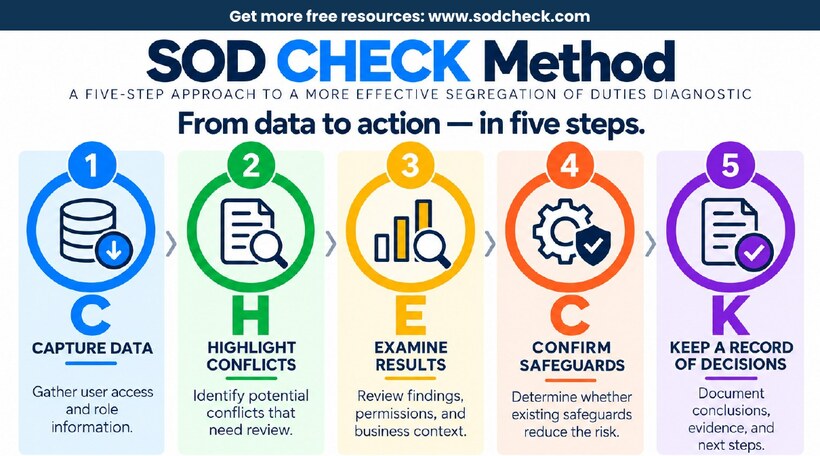
SOD Check Method Overview
Start here

10 Questions Before Your Next Segregation of Duties Review
A readiness check you can finish in about 10 minutes.
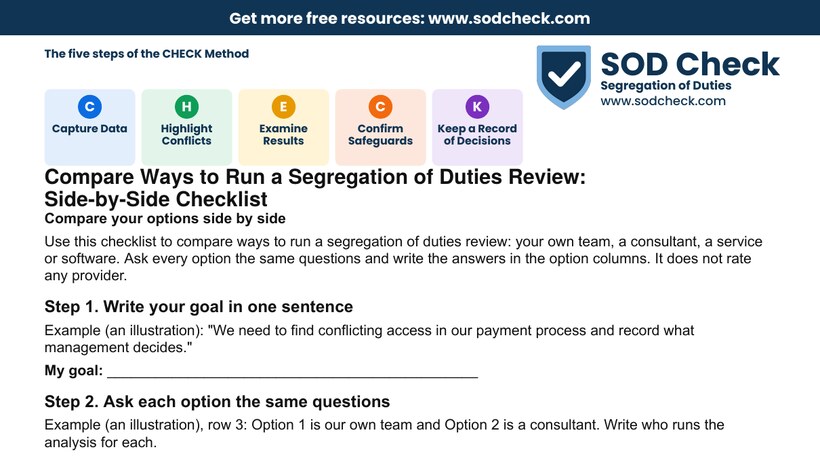
How to Compare Segregation of Duties Review Options
A side-by-side checklist to ask your own team, a consultant, software and a service the same questions.
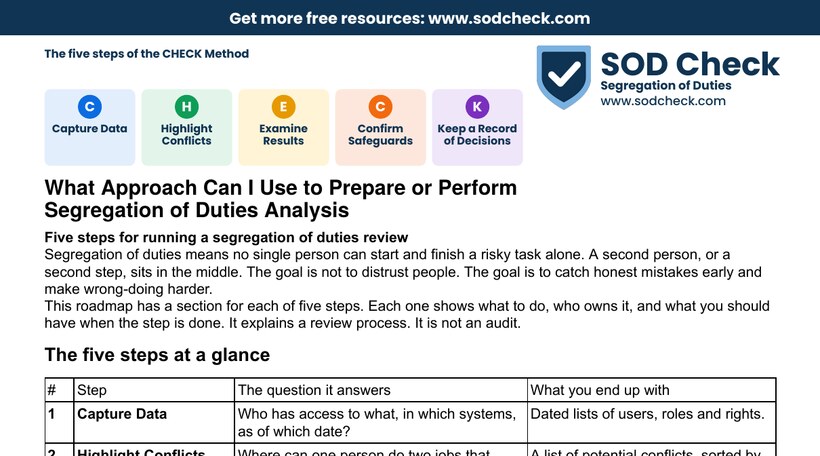
What Approach Can I Use to Prepare or Perform Segregation of Duties Analysis
The ways to run the analysis, and what each one needs from you.
Which worksheet do I use at each step?
The CHECK Method breaks the work into five steps, and there is one worksheet for each. Every worksheet is blank for you to fill in.
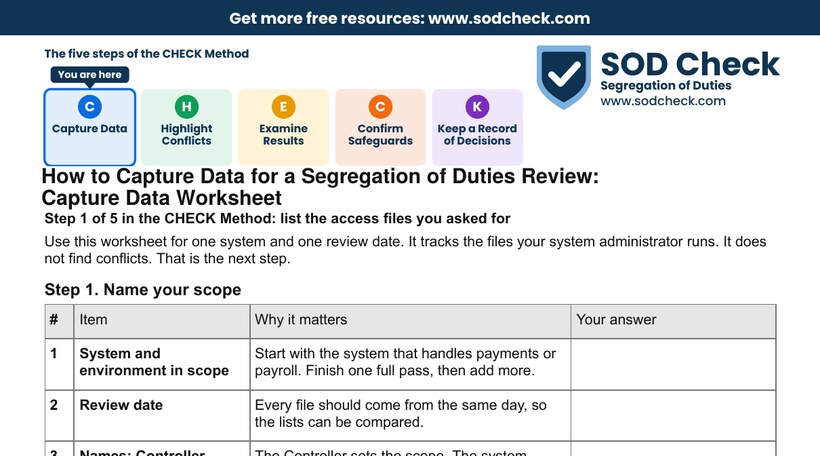
How to Capture Data for a Segregation of Duties Review: Capture Data Worksheet
Part 1
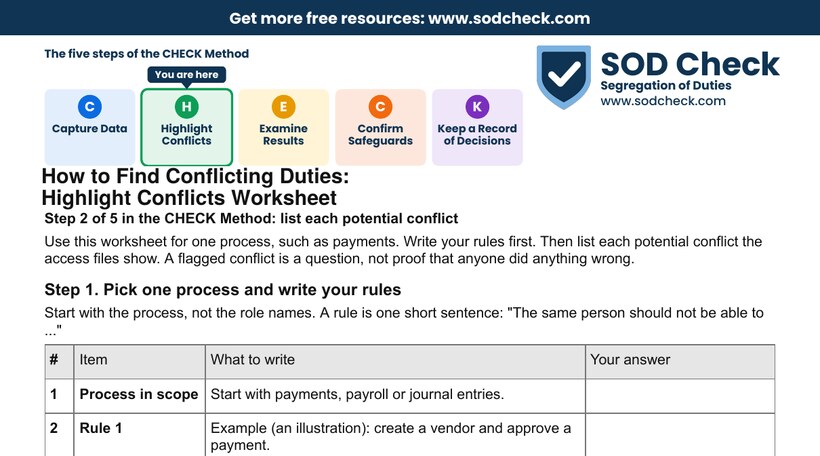
How to Find Conflicting Duties: Highlight Conflicts Worksheet
Part 2
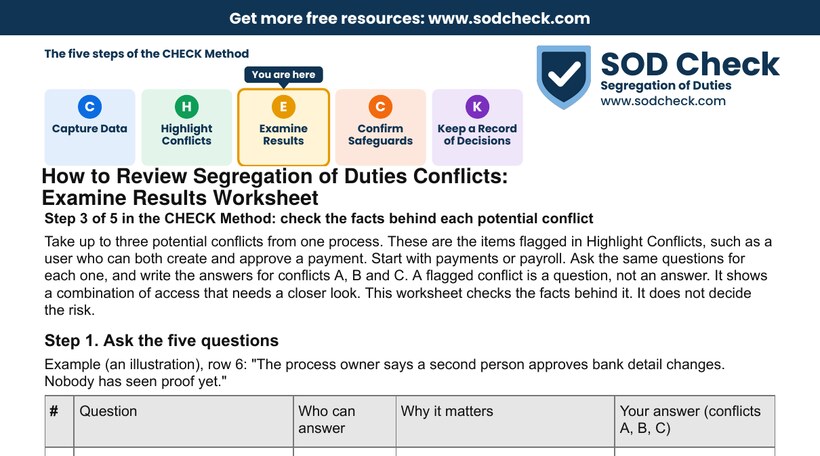
How to Review Segregation of Duties Conflicts: Examine Results Worksheet
Part 3
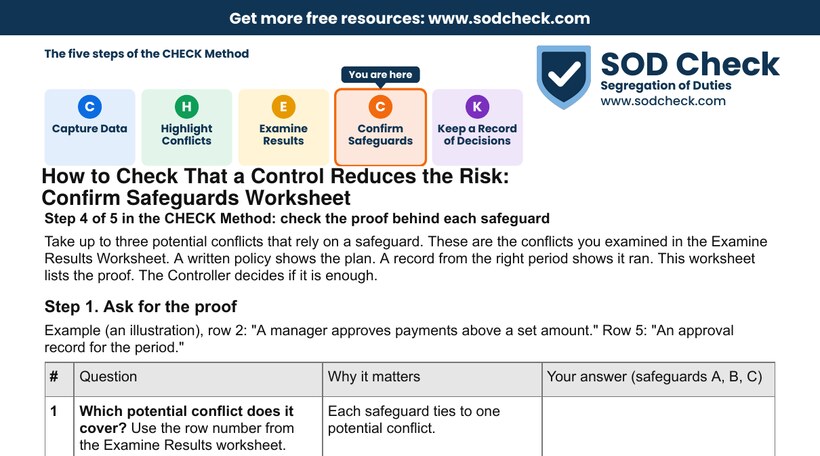
How to Check That a Control Reduces the Risk: Confirm Safeguards Worksheet
Part 4
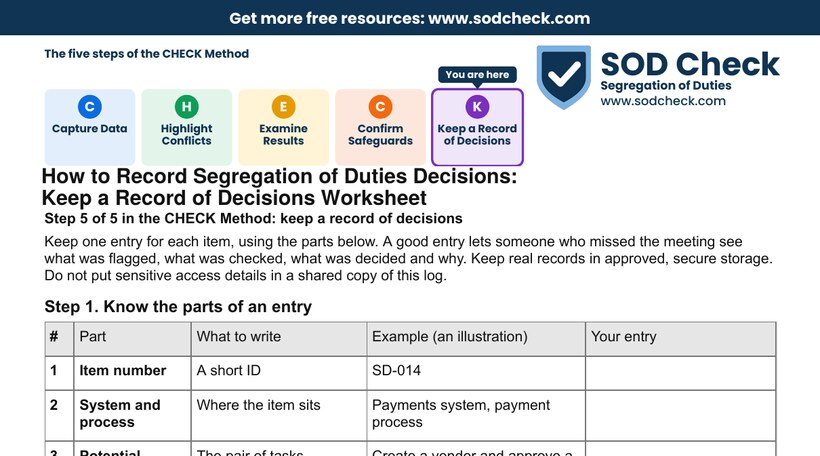
How to Record Segregation of Duties Decisions: Keep a Record of Decisions Worksheet
Part 5
How do I pull the reports a review needs?
Step-by-step instructions you can hand to your system administrator, with screenshots.
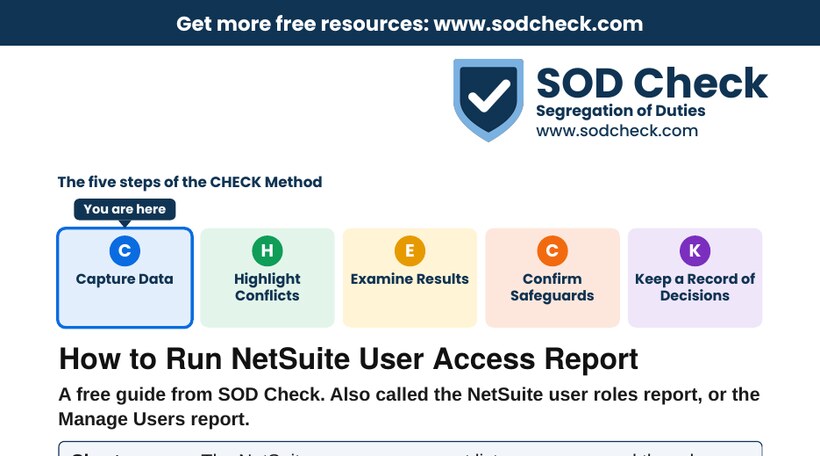
How to Run the NetSuite Manage Users Report
Also called the NetSuite user access report. Where to click and what to export.
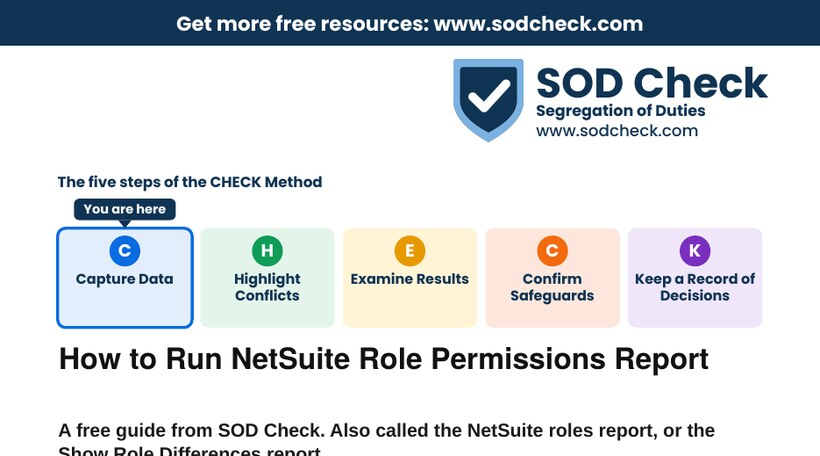
How to Run the NetSuite Show Role Differences Report
Also called the NetSuite role permissions report. How to pull the role and permission detail a review needs.
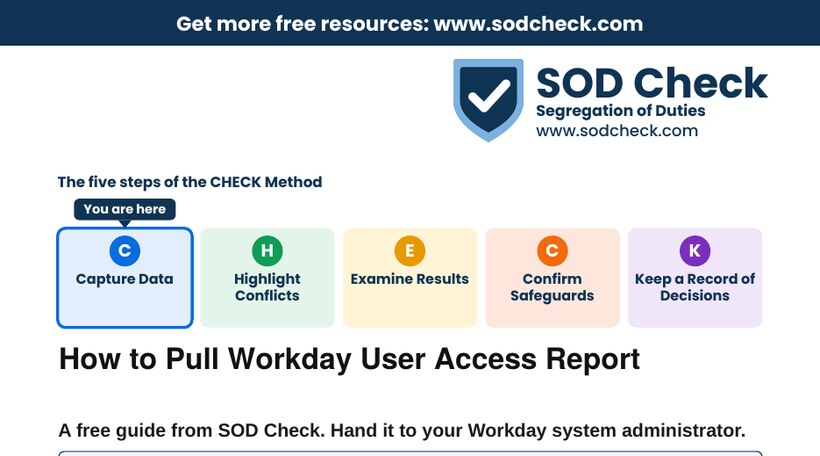
How to Pull the Workday Security Group Assignments Report
Also called the Workday user access report. Hand it to your system administrator.
What does a finished analysis look like?
These are completed SOD Check results workbooks, filled in with sample data. Open one and you see the whole thing: the summary a CFO reads, the conflicts sitting behind it, and the evidence behind every number.
They are also templates. Clear the sample data, put your own under the same headings, and you have the layout a finished analysis uses — free to use inside your company.
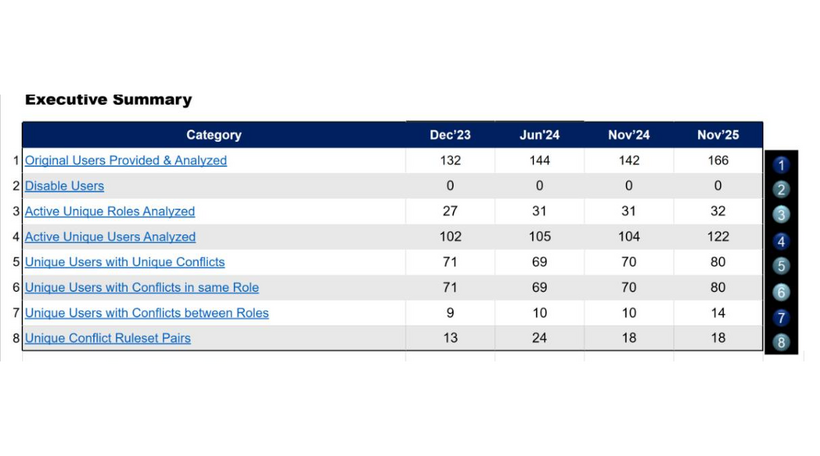
NetSuite
Completed NetSuite results workbooks
Finished examples with sample data, so you can see what a NetSuite analysis produces before you ask for one. Conflicts within a single role and between roles, with the evidence behind each number.
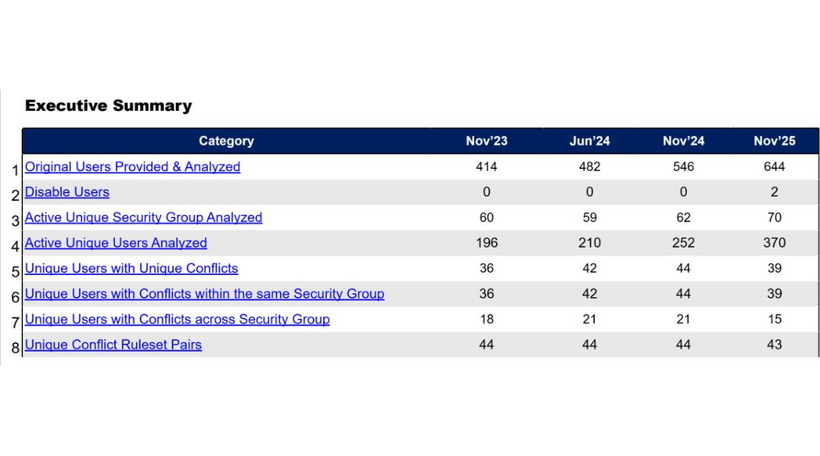
Workday
Completed Workday results workbooks
Finished examples with sample data, so you can see what a Workday analysis produces before you ask for one. Conflicts within a single security group and across security groups, with the evidence behind each number.
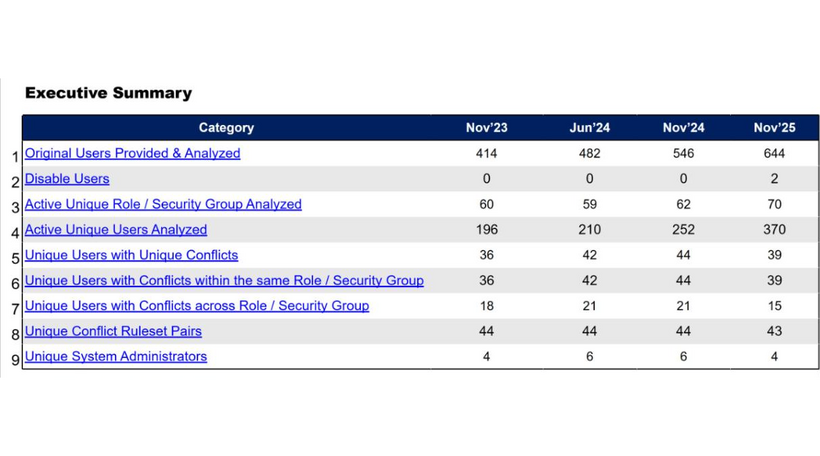
More than one system
Completed cross-system results workbooks
When duties are split across two systems, the conflict only shows up when you look at both together. These examples map roles and security groups side by side and add a count of system administrators.
Not sure where to start?
Bring your situation to a free 15-minute consultation and we will tell you which guide fits, or whether you need one at all.